Arlington Street
The Captain and Ann BarbaraArlington Street in Chelsea, Massachusetts, was the Antin family's first true American neighborhood, the place where their immigrant life took root after a brief, failed venture at Crescent Beach. It was here that Mary Antin, the narrator of The Promised Land, experienced her momentous first day at public school, an event she declared she would remember even if she lived to be so old she could not tell her name. The street was not merely a residence but a proving ground, where the family's hopes for the New World were tested against the realities of poverty, where her father's business acumen was deployed, and where the young immigrant first grasped the concrete meaning of American liberty and justice. As a location, Arlington Street encapsulates the transitional, makeshift nature of the immigrant experience, a place of both humble beginnings and profound personal transformation.
A Neighborhood of Poor Jews, Negroes, and Irish
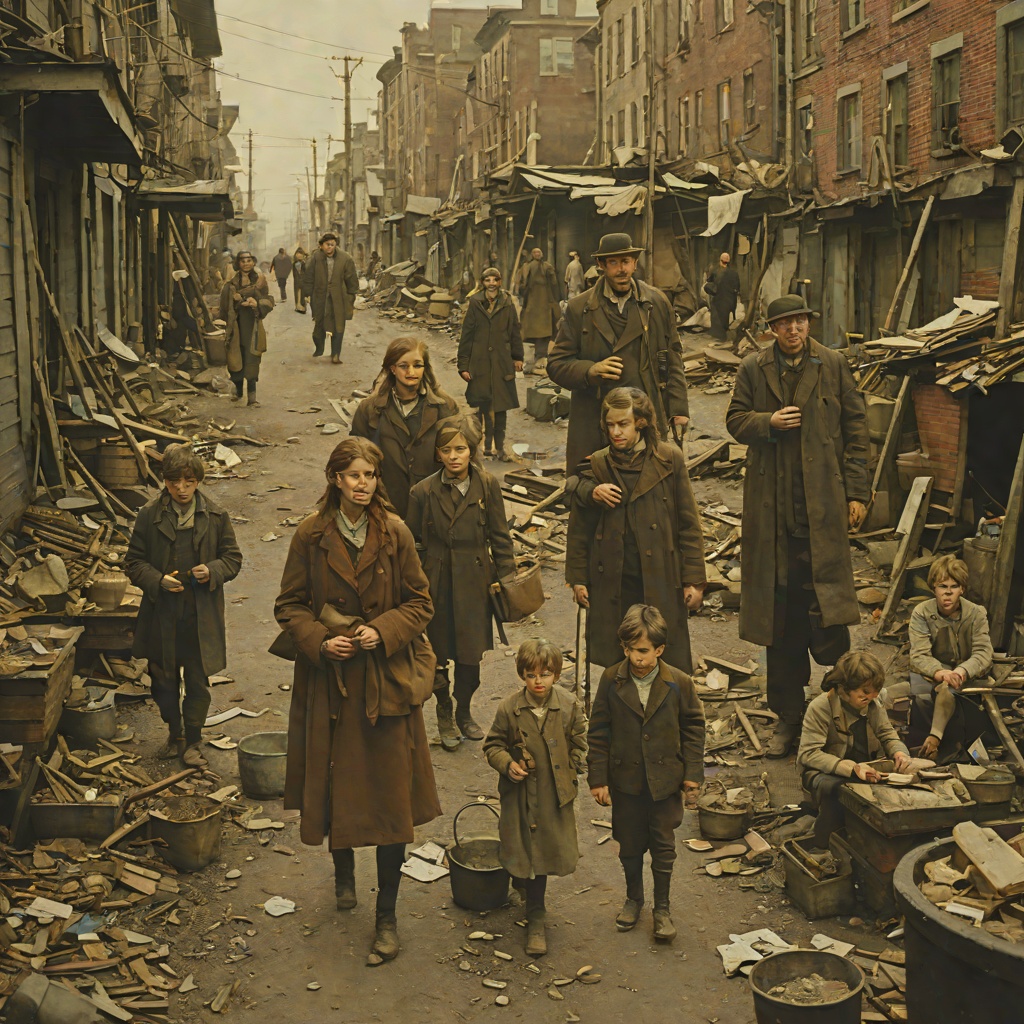
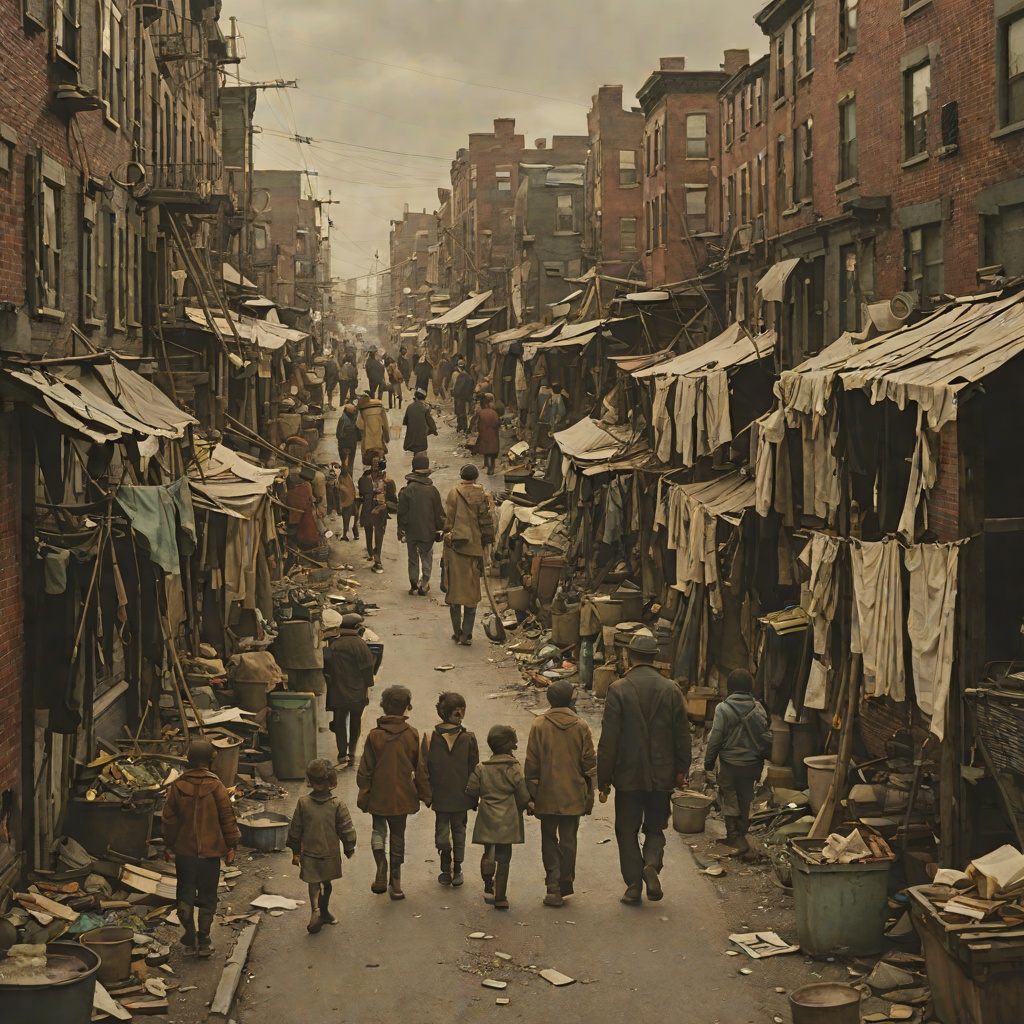
Arlington Street was situated in the wrong end of Chelsea, a proper locality for a man without capital to do business. It was inhabited by poor Jews, poor Negroes, and a sprinkling of poor Irish, with the side streets leading from it occupied by more poor Jews and Negroes. This demographic mix placed the Antin family at the intersection of several immigrant and racial communities, a setting that would later inform Mary's observations on the American social hierarchy. The street's character was defined by its poverty, yet it was also a place of neighborly interaction, where the struggles and triumphs of daily life were shared among its diverse residents.
The Basement Grocery and the Family Business
It was on Arlington Street that Mary's father rented a tenement with a store in the basement, marking the family's entry into the American petty bourgeoisie. He stocked it with a few barrels of flour and sugar, boxes of crackers, gallons of kerosene, an assortment of soap of the save the coupon brands, and in the cellar, barrels of potatoes and a pyramid of kindling-wood. The showcase held an alluring display of penny candy. He put out his sign with a gilt-lettered warning of Strictly Cash, yet proceeded to give credit indiscriminately, a regular way to do business on Arlington Street. This apparent contradiction was a calculated bluff, a protection against notoriously irresponsible customers, while none of the good customers, who had a record for paying regularly on Saturday, hesitated to enter the store with empty purses. Mary's mother, though she had no English yet, threw all her talent and tact into the business, performing the acts of weighing, measuring, and mental computation of fractions mechanically while giving her whole attention to the dark mysteries of the language. Behind the store was the kitchen, where, in the intervals of slack trade, she did her cooking and washing, and Arlington Street customers were used to waiting while the storekeeper salted the soup or rescued a loaf from the oven.
The First Day of School and the Father's Dream
The apex of Mary's civic pride and personal contentment was reached on the bright September morning when she entered the public school from Arlington Street. The importance of the day was a hundred times magnified on account of the years she had waited, the road she had come, and the conscious ambitions she entertained. It was her father who conducted the children to school, a mission he would not have delegated to the President of the United States. He had awaited the day with impatience equal to hers, and the visions he saw as he hurried them over the sun-flecked pavements transcended all her dreams. Almost his first act on landing on American soil, three years before, had been his application for naturalization, and he had become a citizen of the United States at the earliest moment allowed by the law. For him, the boasted freedom of the New World meant far more than the right to reside, travel, and work; it meant the freedom to speak his thoughts, to throw off the shackles of superstition, to test his own fate. Unable to pursue his own education, he sought to realize his ambitions through his children, sending them to school to learn all those things that he knew by fame to be desirable. He took long strides in his eagerness, the rest of the family running and hopping to keep up, and at the teacher's desk, in his impossible English, he gave them over in her charge with some broken word of his hopes that his swelling heart could no longer contain.
Justice and Play on Arlington Street
Arlington Street was also the scene of a formative lesson in American justice. Once a great, hulky colored boy, the torment of the neighborhood, treated Mary roughly while she was playing on the street. Her father, determined to teach the rascal a lesson, had him arrested and brought to court. The boy was locked up overnight and emerged with a respect for the rights and persons of his neighbors. But what interested Mary more than her revenge was what she saw of the way justice was actually administered in the United States. In the little courtroom, bearded Arlington Street stood against wool-headed Arlington Street; accused and accuser, witnesses, sympathizers, sight-seers, and all. Nobody cringed, nobody was bullied, nobody lied who didn't want to. They were all free, and all treated equally, just as it said in the Constitution. The evil-doer was actually punished, and not the victim, as might very easily happen in a similar case in Russia. The street was also the launching point for her Saturday night promenades, when she and her friends, with arms entwined, marched up Broadway and took possession of all they saw, heard, guessed, or desired, from end to end of that main thoroughfare of Chelsea.
A Temporary Home in a Migrant Life
The family's time on Arlington Street was but one chapter in a picaresque journey through American urban landscapes. After a year or so, Mary's father, finding a discrepancy between his assets and liabilities on the wrong side of the ledger, once more struck tent, collected his flock, and set out in search of richer pastures. The move to Wheeler Street in the lower South End of Boston was made with a charming simplicity, as if the family were gypsies carrying their earthly goods wherever they went. There were rather more Negroes on Wheeler Street than there had been on Arlington Street, which promised more numerous outstanding accounts, but they were a neighborly folk. The memory of Arlington Street, however, remained as the site of the family's first American establishment, the place where the immigrant dream first took tangible form in a basement grocery store and a child's first day at school. It stands in contrast to the later, more squalid streets of the South End, such as Dover Street and Harrison Avenue, which Mary would describe with a more critical and disillusioned eye, marking the evolution of her perception from the wonder of the new immigrant to the sober analysis of the seasoned observer.